
What Is a Consignment Note, and Why Do I Need One?
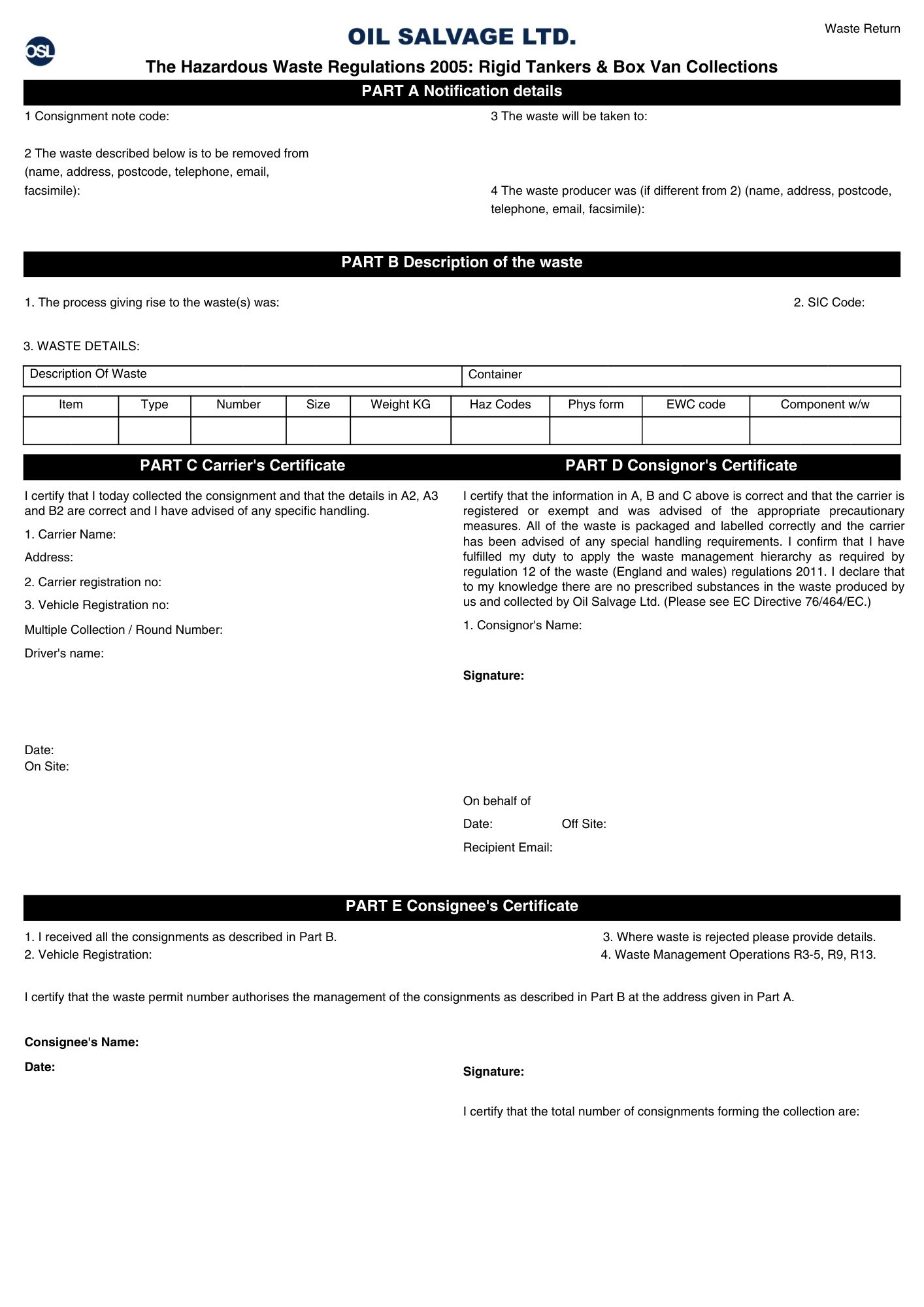
If your business produces hazardous waste such as waste oil, oily rags, or antifreeze, you’ll have likely heard of a consignment note… but what is it, and why is it so important?
In its simplest terms, a hazardous waste consignment note is a legal document that tracks hazardous waste from wherever it is produced to its final destination for treatment, recycling, or disposal.
Making sure that you have accurate consignment notes for any hazardous waste is a legal requirement that ensures that waste is managed safely, responsibly and in full compliance with environmental regulations, and failure to do so can result in hefty fines and criminal prosecution.
What does each part of a consignment note represent?
There is a lot of information contained on a consignment note, and it can sometimes be confusing to understand what each part means, so we’ll break down what each section of the consignment note represents.
Part A- Notification Details
Part A contains the key information on the waste’s movement and location. This usually means the full address of where the waste has been collected from, and then where it is being taken to. This section will also include the unique consignment note code, and if the site is in Wales, then the site’s unique premises code (Hazardous Waste Producer Code) as well.
Part B- Description of the Waste
Part B describes what the waste is and how it is stored. This section will include the SIC Code (the process from which the waste was generated) and the EWC code (waste classification code), as well as a description of the waste’s size, weight, physical form and other key information on the container that the waste was/is stored in. Depending on what the waste is, this section may also include any relevant Hazardous Property Codes to identify the potential risks of handling and storage.
Part C- Carrier’s Details
Part C is completed by the company collecting and transporting the waste. This section proves that whoever is transporting the waste is licensed to do so, and confirms that whatever waste was collected matches the description in part B. Specifically, this section will include the carrier’s registration number and the details of the vehicle and driver who collected the waste.
Part D- Consignor’s Certificate
Part D is the waste producer’s declaration, and the part that you will sign off. This section confirms that you are satisfied that the waste description is accurate and that you are happy that the waste has been collected properly.
Part E- Consignee’s Certificate
Part E is signed off by the site receiving the waste for treatment, recycling, or disposal. This final part of the note contains the waste facilities details and confirms that they have received the waste that has been described. It will also state what will happen to the waste at the facility, and then, if there are any issues, such as the waste being rejected, this will also be included.
These notes provide a full paper trail of what happens to the waste, and it is a legal requirement that they are kept for at least 3 years after each collection to ensure full traceability of your hazardous waste.
Here at Oil Salvage, we provide the full consignment note at no extra charge with every collection, so you can relax and know that your waste is collected and treated in a fully compliant manner, and you have all the relevant paperwork to back it up.
If you have any questions about your consignment note, or if you require one for a previous collection, please contact us directly.